What Does “Broad Spectrum” Mean in CBD Gummies vs. Oils?
“Broad spectrum” sounds like a promise of more plant compounds and no THC. But the label alone does not tell you exactly what is in a bottle of CBD oil or a bag of CBD gummies—or whether the product is a sensible choice if you need to avoid THC.
In general, broad-spectrum CBD is made to contain CBD and other hemp compounds while having THC removed to a level the manufacturer describes as none or undetectable. That wording is not a guarantee that every batch contains absolutely zero THC. The best way to check is to look for a recent, batch-specific certificate of analysis, or COA, from an independent lab.
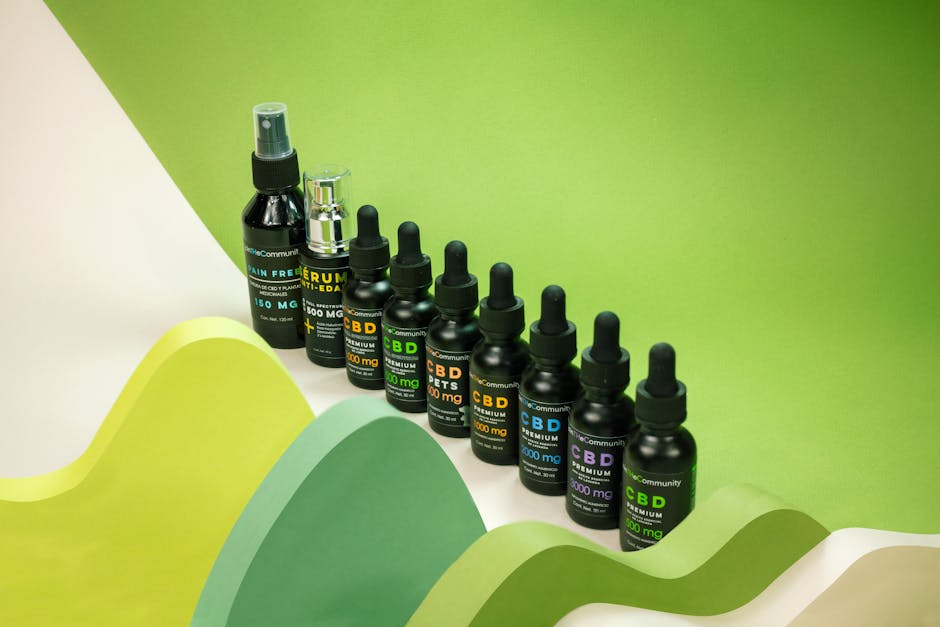
The distinction matters whether you are comparing oils, gummies, or both. The product format changes how CBD hemp extract refinement is measured and taken; it does not change what “broad spectrum” is supposed to mean. Here is how to read the terms, review the testing, and think about drug-testing risk without relying on label shorthand.
What “broad spectrum” means
CBD stands for cannabidiol, one of many compounds found in hemp and cannabis plants. A broad-spectrum extract is intended to include CBD along with some other naturally occurring hemp compounds—such as other cannabinoids or aromatic compounds—while undergoing refinement to remove THC.
There is no universal formula that every product must follow to earn the label “broad spectrum.” The mix of compounds can differ by manufacturer, product, and batch. One company’s broad-spectrum oil may contain several cannabinoids, while another product using the same term may have a different profile. Check the COA rather than assuming that the phrase describes a fixed recipe.
Broad-spectrum vs. full-spectrum vs. isolate
These terms describe the extract, not whether a product comes as a gummy, oil, capsule, or topical. A gummy and an oil can both be made with broad-spectrum, full-spectrum, or isolate CBD.
Type What it generally contains What to keep in mind Broad-spectrum CBD CBD and potentially other hemp compounds, with THC removed or intended to be removed “THC-free” claims need to be checked against the finished product’s batch report and the lab’s detection limits. Full-spectrum CBD CBD and other hemp compounds, including some THC Federal hemp rules set a delta-9 THC limit for hemp, but that does not mean a full-spectrum product has no THC. State rules and product details also matter. CBD isolate CBD separated from most or all other plant compounds It is the most narrowly focused extract, but consumers should still verify the product’s contents and testing.Those are broad categories, not guarantees about a particular product. A label may use a term correctly, loosely, or in a way that leaves out useful detail. The test report is where you can see whether the finished product’s measured contents line up with the claim.
Why the “entourage effect” comes up
The entourage effect is the idea that compounds from the cannabis or hemp plant may act differently together than they do separately. In everyday terms, it is a proposed “team effect” among CBD and other plant compounds.
The idea is often used to explain why someone might prefer a multi-compound extract over CBD isolate. But it is not proof that broad-spectrum products work better, or that a particular blend will deliver a specific result. Research is ongoing, and product claims should not get ahead of the evidence. Be wary of a brand that presents the entourage effect as a guaranteed outcome or a cure for a health condition.
Broad-spectrum CBD in gummies vs. oils
CBD oil
CBD oil typically combines an extract with a carrier oil. The label may state the total CBD in the bottle and the amount per serving, often measured in milligrams. To compare products, check both figures: a larger bottle does not automatically contain a higher amount of CBD per serving.
An oil can be easier to adjust in small increments if the label gives a clear amount per measured dropper. But droppers are not always marked consistently, and a “dropperful” is not a universal serving size. Read the package directions and look for milligrams per milliliter or per serving, not just the total in the bottle.
CBD gummies
CBD gummies are edible products with a stated amount of CBD per piece. They may also contain sugar, sweeteners, flavorings, or other ingredients, so check the full ingredient list if you have allergies or dietary preferences.
Gummies are pre-portioned, which can make the labeled amount per piece straightforward to understand. Still, the advertised milligrams are only useful if they match the product’s testing and serving directions. Because a gummy is eaten, its effects may take longer to be noticed than an oil held in the mouth; timing can vary from person to person. Avoid taking more simply because you do not notice an immediate effect.
With both formats, “broad spectrum” refers to the extract, not the delivery method. A broad-spectrum gummy is not automatically more THC-free than a broad-spectrum oil. The relevant questions are whether the finished product was tested, which batch the report covers, and what the report says about THC.
CBD isolate vs broad-spectrumHow to use a batch-specific COA
A certificate of analysis (COA) is a lab report that lists test results for a product. “Batch-specific” means the report identifies the same production batch or lot number printed on the item you are considering. A general report for a brand, a different product, or an older batch is not the same thing.
Before buying, use this checklist:
- Match the lot number. Find the batch or lot code on the package and confirm that the COA shows the same code.
- Check the product name and format. A report for an oil does not automatically verify a gummy, even if both carry the same brand name.
- Look at cannabinoid results. Find CBD and THC results, including any listed THC forms. “Not detected” means the lab did not detect the compound at its stated method limit; it does not mean a universal, absolute zero.
- Read the units. Results may be reported as a percentage, milligrams per gram, or milligrams per serving. Make sure you understand what the figures apply to.
- Check the testing date and lab. The report should identify the laboratory and provide a date. If the report is difficult to locate or does not identify the tested sample, ask the seller for clarification.
- Review other safety screens. Depending on the product and lab panel, testing may include contaminants such as pesticides, heavy metals, residual solvents, or microbes. A cannabinoid panel alone does not answer every safety question.
Testing is useful only if it applies to the product in your hand. A brand’s broad statement that “all products are third-party tested” is less informative than an accessible report tied to the finished product’s batch. Refinement and testing are separate steps: refinement is how a maker processes an extract, while lab testing checks what is present in a sample after processing.
How THC is removed—and why testing still matters
Manufacturers can use extraction and refinement steps to separate or reduce unwanted compounds, including THC. The exact process varies. A product may be tested during production, but the most practical document for a shopper is a COA for the finished product and matching batch. Testing only an ingredient before it is made into a gummy, for example, does not by itself confirm the final gummy’s contents.
Even when a product is marketed as THC-free, a test may have a detection limit: the smallest amount the method can reliably detect. If THC is below that limit, a report may show “not detected.” That is useful information, but it is not the same as proving that no molecule of THC is present. Ask what the report measures and whether it applies to the product’s final form.
THC-free claims and drug-testing risk
People often choose broad-spectrum CBD because they want other hemp compounds without THC. That preference is understandable, particularly for people subject to workplace, athletic, or legal drug testing. But no CBD product can be responsibly described as a guaranteed way to avoid a positive drug test.
Drug tests are generally designed to detect THC or its metabolites, not to confirm whether someone used CBD. A test result can depend on the test, the product, the amount and frequency used, and individual factors. Broad-spectrum products may have THC removed, but small amounts could remain, be present below a lab’s detection limit, or result from inaccurate labeling or contamination. A product labeled “THC-free” is not a promise about your test result.
If a positive result could affect your job or another important obligation, the cautious choice is to avoid CBD and other cannabinoid products unless you have reliable guidance from the relevant testing program or a qualified professional. Do not treat a COA as a guarantee that a drug test will be negative.

Why CBD became more mainstream after the 2018 Farm Bill
The 2018 Farm Bill removed hemp—defined in federal law by a delta-9 THC concentration limit of no more than 0.3% on a dry-weight basis—from the federal controlled-substances definition. That change helped expand the legal hemp market and brought CBD products into more pharmacies, grocery stores, and online shops.
It did not create blanket approval for every CBD product or every health claim. Rules can vary by state and product type, and the federal government still regulates products under laws that apply to foods, supplements, drugs, and cosmetics. A product’s availability on a shelf is not proof that it has been evaluated for effectiveness or approved to treat a condition.
Prices and product comparisons
If you are comparing products using a scraped article or shopping summary, one common gap is that no product prices are listed. That means there is no reliable price comparison to make from that information, and it would be misleading to fill in prices by guessing. Prices also change with promotions, bottle size, and serving count.
When prices are available, compare like with like: cost per milligram of CBD, number of servings, and the amount per serving. Then weigh those figures against the quality of the batch-specific testing and clarity of the label. A lower price is not a bargain if the seller cannot show what is in the product.
A practical buying checklist
- Decide whether you are looking for broad-spectrum, full-spectrum, or isolate, and understand that the label is a starting point—not a test result.
- For a broad-spectrum product, look for a finished-product COA with a lot number that matches the package.
- Check the THC results and the lab’s detection limit; do not read “not detected” as proof of absolute zero.
- Compare CBD per serving as well as total CBD, especially when weighing gummies against oils.
- Review ingredients, directions, and any relevant safety testing. If you take medication, are pregnant or breastfeeding, or have a health concern, ask a qualified health professional before using CBD.
- If drug testing matters, remember that no label or COA can guarantee a negative result.
The bottom line
Broad-spectrum CBD generally means an extract made to retain CBD and other hemp compounds while removing THC. The term does not specify an identical ingredient profile across brands, and it does not make a gummy fundamentally different from an oil. The format affects serving size and ingredients; the extract category describes the cannabinoid profile.
For shoppers, the most useful evidence is a clear label paired with a current, batch-specific COA for the exact product. That report can help verify cannabinoid amounts and show whether THC was detected, but it cannot guarantee a drug-test outcome or prove that CBD will treat a condition. When a seller cannot provide the batch report—or the report does not match the package—keep looking.