Full-Spectrum CBD Has 0.3% THC: Will I Fail a Drug Test?
Short answer: It is possible. Full-spectrum CBD products can contain THC, and using them may lead to a positive workplace drug test. The “0.3% THC” figure is a legal threshold used to define hemp under federal law—not a promise that a product is THC-free or that you will pass a test.
If a positive result could affect your job, professional license, probation status or another important matter, the lowest-risk choice is to avoid products that contain THC. Even a label that says “hemp” or “compliant with the 2018 Farm Bill” does not settle the drug-testing question. The details that matter include the product’s actual contents, how much you use, how often you use it and the sensitivity of the test.
What does the 0.3% THC rule mean?
The 0.3% THC rule is a federal definition used to distinguish hemp from marijuana. In general, hemp is cannabis with no more than 0.3% delta-9 THC by dry weight. That legal classification helped open the door to hemp-derived CBD products after the 2018 Farm Bill, but it does not mean every hemp product contains exactly 0.3% THC. Some contain less; some are formulated to contain no detectable THC; and products may differ from what their labels claim.
It also does not mean that a person can use any amount of a product below that limit without a drug-testing risk. A small percentage can still represent THC exposure, especially with repeated use or a high serving size. The percentage is about the product’s legal category, not a personal guarantee about a test result.
How CBD drug tests work
Most standard workplace drug screens are designed to look for THC byproducts, not CBD itself. After THC enters the body, it is metabolized into compounds that can be detected in urine. CBD is a different cannabinoid and is not usually what a standard THC screen is targeting. The concern is that a CBD product—particularly full-spectrum CBD—may also deliver THC.
Whether use leads to a positive result depends on several factors, including the amount of THC in the product, serving size, frequency of use, individual metabolism and the test’s cutoff and confirmation procedures. There is no reliable way to calculate an individual’s result from the label alone. A negative test today also cannot guarantee a negative result after later use.
For people who are subject to testing, it is worth checking the rules that apply to their specific workplace or program. Policies can differ, and a product’s legal sale does not necessarily protect a user from workplace consequences. If testing has serious implications, ask the relevant program or a qualified professional about its policy before using a cannabinoid product.
Full-spectrum vs. broad-spectrum vs. CBD isolate
These terms describe different types of CBD extracts. They are useful starting points, but labels are not a substitute for checking a batch-specific certificate of analysis.
Product type What it generally contains Drug-test consideration Full-spectrum CBD CBD and other hemp compounds, which may include THC within the product’s legal limits Higher concern if you need to avoid THC; the label does not guarantee a negative test Broad-spectrum CBD CBD and some other hemp compounds, with THC intended to be removed Often marketed as THC-free, but trace amounts may remain or test results may vary CBD isolate CBD separated from most other hemp compounds Generally the lowest THC exposure among these options, but check the finished product’s lab reportFull-spectrum CBD
Full-spectrum products are made to retain a range of naturally occurring hemp compounds. Depending on the extract and formulation, those may include other cannabinoids, aromatic compounds and THC. “Full-spectrum” does not tell you the precise THC amount in a bottle or serving. That information should be available in a current report for the product batch.
Broad-spectrum CBD
Broad-spectrum products are processed to remove THC while retaining CBD and, in some cases, other hemp compounds. Some brands describe them as THC-free. That wording deserves a closer look: ask whether “free” means no THC detected by a particular lab method, and check the report’s detection limit. A report that says “not detected” means the lab did not find THC above its ability to measure it; it does not prove that no molecule is present.
CBD isolate
CBD isolate is a more purified form of CBD, usually with most other plant compounds removed. It may be a better fit for someone seeking to minimize THC exposure, but no category label is a guarantee. The final product can be contaminated, inaccurately labeled or made with ingredients that affect what is in the bottle. Look for testing of the finished product, not just a report for a raw ingredient.
What the “entourage effect” means—and what it does not
The entourage effect is the idea that cannabis compounds may work differently together than they do on their own. Put simply, it is a proposed “whole mixture” effect: CBD, other cannabinoids and plant compounds may influence one another. Some consumers choose full-spectrum products for this reason.
But the phrase is not proof that a full-spectrum product will work better for a particular person. Research is ongoing, and product claims should not be treated as established medical benefits. The possible appeal of a broader extract also needs to be weighed against its THC content, especially for anyone who cannot risk a positive drug test.
How to check a batch-specific COA
A certificate of analysis, or COA, is a laboratory report showing test results for a specific sample. “Batch-specific” means the report is tied to the production lot you are buying, rather than being a generic example or an old report for a different product. A COA is useful only if you can connect it to the package in your hand.
- Match the batch number. Compare the lot or batch number on the product with the number on the report. If they do not match, ask the company for the correct COA.
- Check the date and product name. The report should be current enough to apply to that product and clearly identify the formulation, such as an oil, gummy or capsule.
- Find the cannabinoid results. Look for delta-9 THC and, where reported, other relevant cannabinoids. Check the amount per serving or container as well as any percentage listed.
- Read “ND” carefully. “Not detected” means below that lab’s reporting threshold. Look for the limit of detection or limit of quantification, if provided. A result can be too small for one method to detect but still not equal to absolute zero.
- Look for an independent lab. The report should name the laboratory and show what was tested. A logo or QR code by itself is not proof; open the report and review its details.
- Check the product, not just the starting extract. A finished oil or gummy may differ from its raw CBD ingredient. Prefer a COA that tests the final formulation.
Third-party testing is not a guarantee that a product is risk-free. It is a way to get better information. If the company will not provide a report for the batch, or the report does not show THC results clearly, treat that as a reason to pause.
What lab testing and refinement can—and cannot—tell you
Manufacturers may use refinement steps to separate CBD from THC and other plant compounds. Processes can include filtration, distillation or other separation methods. The exact approach varies, and processing does not automatically remove every trace of THC from every finished product.

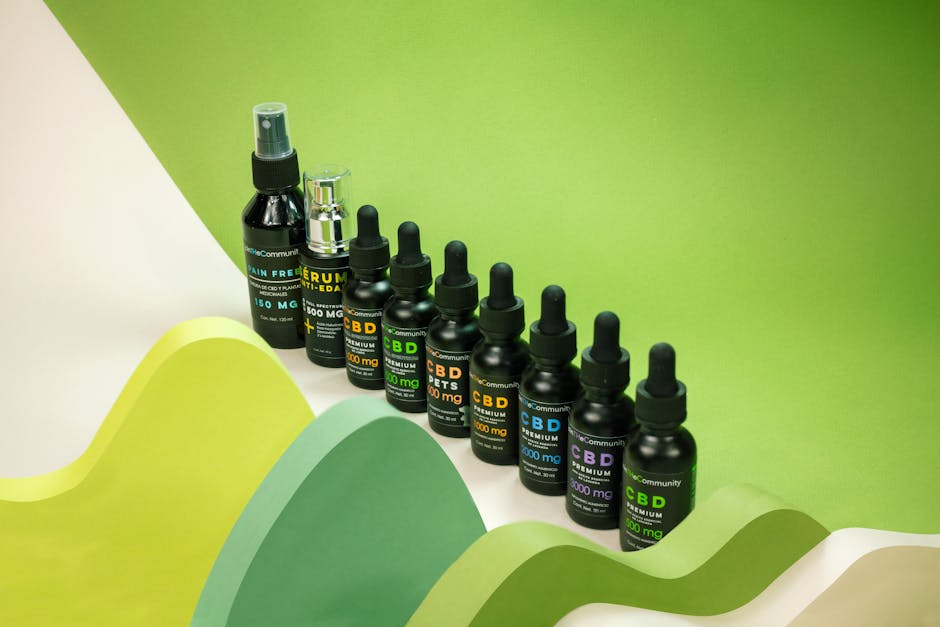
Testing is the check on the result: a laboratory analyzes a sample to estimate which cannabinoids are present and at what levels. Good quality control may include testing ingredients and finished batches, but the report should make clear what sample was tested. A claim such as “THC-free after refinement” is less useful than a recent batch-specific COA showing the actual result and the lab’s reporting threshold.
Keep in mind that a COA describes the sample tested. It cannot guarantee that every bottle is identical, that the product will stay unchanged over time or that a person will pass a drug test. It does, however, give you a more concrete basis for judging a product than marketing language alone.
Why CBD became mainstream after the 2018 Farm Bill
The 2018 Farm Bill changed the federal treatment of hemp and helped expand the market for hemp-derived CBD. Products moved into online shops, wellness aisles and some pharmacies, while more consumers encountered CBD oils, capsules, topicals and drinks. That wider availability can make CBD seem like an https://www.bocaratontribune.com/bocaratonnews/2026/09/how-thc-free-cbd-products-became-a-mainstream-wellness-choice/ ordinary over-the-counter wellness item.
But mainstream shelf space is not the same as uniform product quality or a guarantee about drug testing. Rules and oversight can vary by product type and location, and labels may use terms that sound more definitive than the evidence behind them. Check the actual ingredients and lab report rather than relying on a product’s popularity or placement in a store.
What about products with no prices listed?
If you are reading a scraped article or product roundup that lists CBD products but shows no prices, do not assume a price or use the list as a value comparison. Prices can change, and the missing information may reflect the way the page was captured rather than the current cost. Check the seller’s current listing directly before comparing products.
For this question, price is not the deciding factor anyway. A lower-cost product without a usable batch COA may offer less information about THC exposure than a more expensive one with clear testing. Compare the product’s formulation, THC results and quality documentation first; treat price as a separate shopping detail.
So, will full-spectrum CBD make you fail?
No one can promise that you will pass or fail based only on the phrase “full-spectrum CBD” or the 0.3% THC rule. Full-spectrum products may contain THC, and repeated use can create a real CBD drug test risk. If a positive result would have serious consequences, avoiding full-spectrum products—and, more broadly, products containing THC—is the cautious choice.
Broad-spectrum products and CBD isolate may reduce THC exposure, but they are not automatic guarantees. Read the batch-specific COA, confirm that it covers the finished product and pay attention to what “not detected” means. If a company cannot provide clear, matching lab results, you do not have enough information to rely on its THC-free claim.